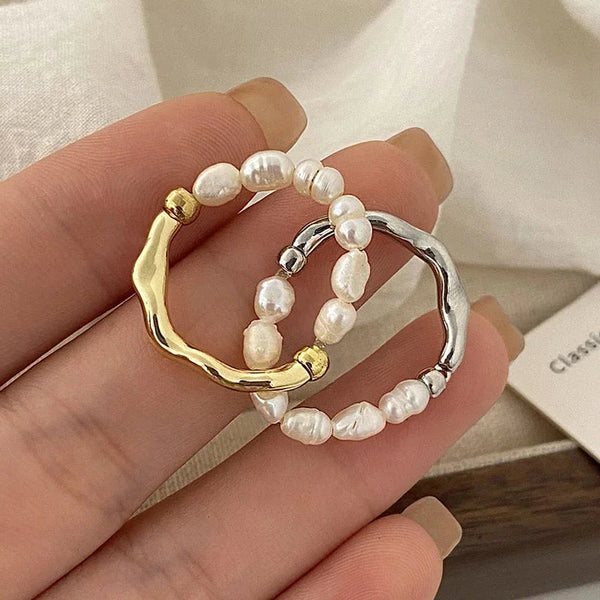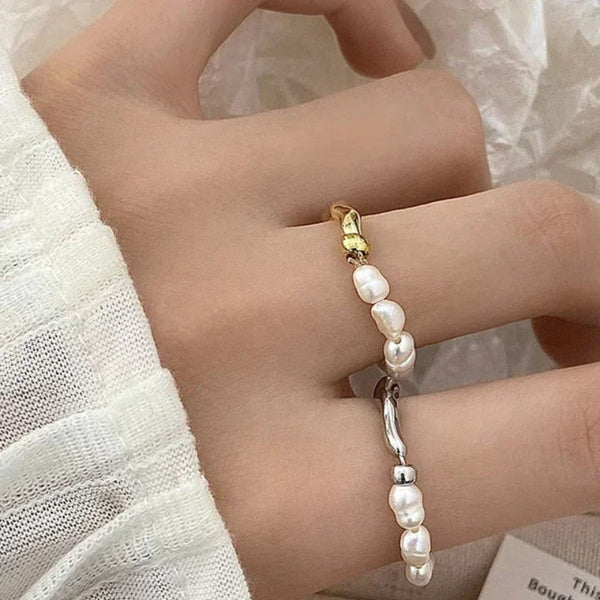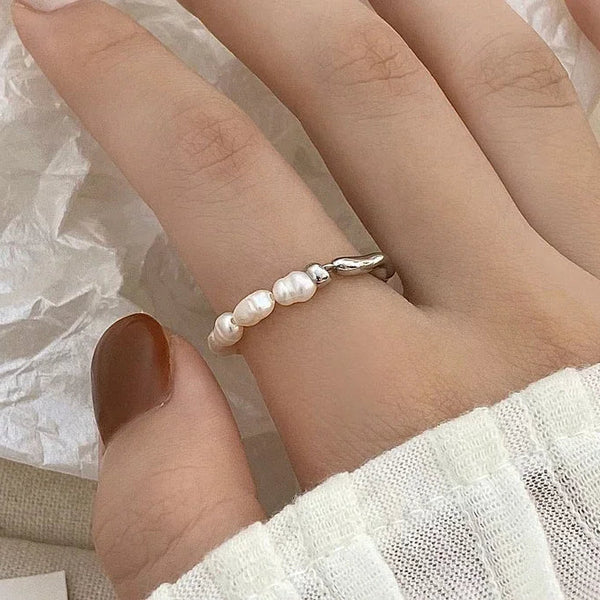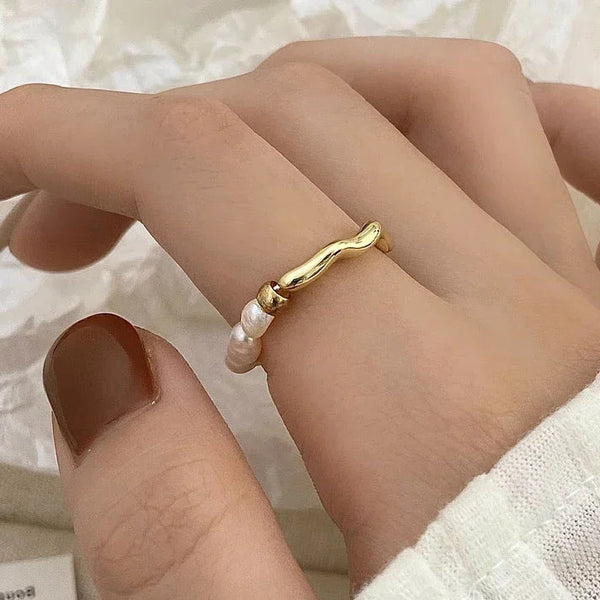

A genuine shell ring is carved from, or set with, a piece of real ocean shell. Nacre, cowrie, abalone, conch, puka: the material once lived in the sea. No resin pour, no printed plastic, no iridescent sticker pretending to be mother-of-pearl. That single difference changes how the piece catches the light, how it feels against your skin, and how long it stays beautiful. Here's how to recognize the real thing before you spend a cent on it.
What Makes a Shell Ring 'Real'? The Short Answer
The shell has to be the actual shell. It can be cut into a disc, polished into an inlay, or set whole on a band, but it keeps its natural structure. Most quality pieces pair it with stainless steel, sterling silver or gold-plated metal, because the setting protects the fragile edges. The shell itself is never moulded or printed. If a brand can produce ten thousand identical pieces with identical patterns, you are not looking at the ocean.
Real Shell vs. Resin, Acrylic & 'Shell-Look' Imitations
Imitations are everywhere, and some are convincing from across the room. Resin is a liquid plastic poured into a mould and hardened, often with glitter or pearly pigment mixed in. Acrylic gives the same effect with a flatter, slightly cloudy finish. Both repeat the same swirl over and over again. The giveaway? Shine without depth. Fakes glitter on the surface, while real nacre, the glossy inner layer of a shell, has light moving inside it, under the surface, the way sunlight moves under water.
The Shells You'll Actually Find in Fine Rings
- Nacre (mother-of-pearl): the creamy, rainbow-sheened lining of oysters and abalone. Soft white, pink, grey or near-black.
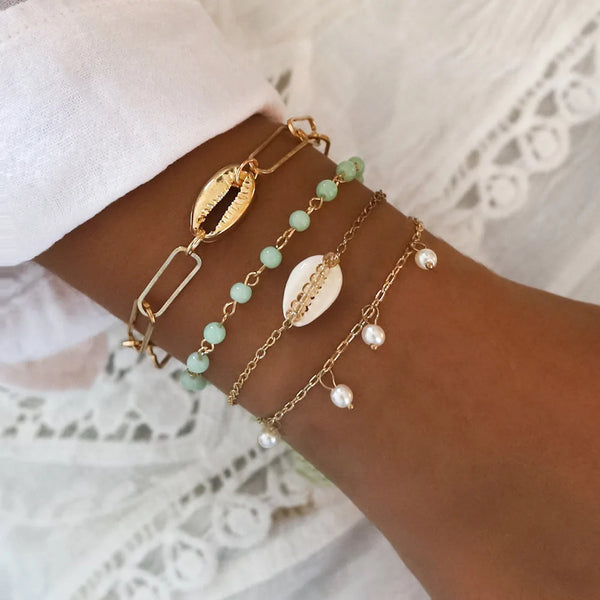
- Cowrie: the small, rounded shell with a toothed slit, carried as a symbol of femininity and good fortune for centuries.
- Abalone (paua): wild blues, greens and purples that shift with every angle. The most dramatic of them all.
- Conch: warm pinks and peachy tones, dense and smooth when polished.
- Puka: naturally tumbled shell fragments with a hole worn through by the sea itself.
Why No Two Real Shell Rings Are Ever the Same
A shell is a growth record. The animal built it slowly, layer over layer, through seasons of warm water, cold water, storms and calm. Those layers leave marks. Your ring carries a pattern that formed once, in one place, and will never be duplicated. That is the quiet luxury of natural material: you own an original, not a copy, and the woman next to you at the beach bar wears something subtly different.
The Light Test: How Genuine Nacre Moves Like Water
Tilt the ring slowly under daylight. True nacre shifts. Pink slides into green, green into silver, and the glow seems to come from beneath the surface rather than sit on top of it. Plastic does the opposite: it flashes once and goes flat. Try it near a window rather than under a shop spotlight, because harsh artificial light flatters imitations.
Imperfection as Signature
Look for faint ridges, growth lines, tiny irregular edges, a hairline variation in colour. These are not flaws. They are proof. Factory-made pieces are suspiciously perfect, with clean uniform swirls and zero texture. A real shell ring often shows a slightly different pattern on the back of the inlay than on the front, because the material was never designed, only shaped.
The Energy of the Ocean on Your Finger
There is a reason women have worn shells since long before jewelry had a price tag. Shells came from a world people could not control, carried home as protection and as a promise of return. Cowries especially were used as currency, as fertility charms, as symbols of feminine power and abundance across Africa, Asia and the Pacific. Wearing one is a small act of connection to all of that.
Why Synthetic Can Mimic the Look But Never the Feeling
Plastic can copy a colour. What it cannot copy is the memory of a living thing shaped by tides. When you turn a real shell between your fingers, you feel cool density, slight weight, a surface that was polished rather than printed. Some women call it energy, others simply call it character. Either way, you notice the difference the moment you wear it.
How to Verify Authenticity Before You Buy
The Touch & Temperature Test
Hold the ring in your palm for a few seconds. Real shell starts cool and warms up slowly, like stone. Resin matches your body heat almost instantly and feels faintly warm from the first touch. Run a fingertip across the surface too: genuine nacre has a silky, slightly uneven glide, while plastic feels rubbery or glassy-smooth.
The Scratch, Sound & Weight Checks
Tap the shell gently against your tooth or a fingernail. Shell gives a small, crisp click. Plastic sounds dull and hollow. Shell also has more heft than you expect for its size, so a feather-light piece with a thick inlay deserves suspicion. If you can test an unseen edge, a very light scratch with a pin will skid off shell but bite into resin. Use this one carefully, and only where it won't show.
Red Flags in Product Descriptions
Words matter here. "Shell-effect", "pearl-look", "nacre style" and "inspired by mother-of-pearl" all mean synthetic. Honest listings say "natural shell", "genuine mother-of-pearl", "real abalone", and usually warn that colour and pattern vary from piece to piece. That little disclaimer is the best authenticity signal there is, because only natural material needs it.
Questions Worth Asking a Seller
- Which shell species is used, and where does it come from?
- Is the shell a by-product of the food industry or collected after being naturally shed?
- What metal holds it, and is it waterproof?
- Does the pattern vary between pieces?
The Eco-Conscious Side: Ethical Shell Harvesting
Naturally Shed vs. Harvested Shells
Responsible shell jewelry works with what the sea leaves behind or with shells that would otherwise be discarded after harvest for food. Nothing is taken from a living reef, and protected species stay protected. Hand-selecting material is slower and yields less, which is exactly why handcrafted pieces come in small quantities instead of endless stock. Ask, and a serious brand will answer without hesitating.
Why Plastic 'Beach Jewelry' Is the Less Sustainable Choice
The irony of a plastic seashell ring is hard to miss. It is made from petroleum, worn for one summer, then cracks and ends up in a bin, often eventually back in the water it was imitating. A real shell is calcium carbonate, a natural material that ages gracefully and can be kept for years. Buying one good piece beats replacing five cheap ones.
Choosing Your Real Shell Ring: Styles for Every Kind of Wild Heart
Minimalist & Everyday
If you want something you'll never take off, go for a slim band with a single polished disc of white nacre. It slips under a sleeve, flatters every skin tone, and sits beautifully beside a watch or a thin gold chain bracelet. A piece like the Minimalist Shell Ring works from a morning swim straight through to dinner, which is the whole point of coastal jewelry.

Statement Shapes
Some hands want more. Sculpted silhouettes, geometric settings and multi-shell designs turn a bare hand into a whole look, especially with sun-warmed skin and a linen dress. The Starfish Shell Ring is a good example of a piece that reads bold without being heavy, and it pairs easily with an unpolished, barefoot kind of summer.

Real Shell Rings for Men
Shell is not only a women's material. Men's styles lean toward wider bands, darker nacre and cleaner graphic lines. The Roman Numeral Black Shell Ring has that quiet surfer energy: black shell, structured metal, nothing shouty. It also looks very good stacked with a leather cord bracelet.

Stacking & Layering
Build slowly. Two or three rings on one hand, one bolder piece balanced by two thin ones, and a mix of white and iridescent shell for depth. Keep the metals in the same family so the look stays intentional. Leave your dominant hand lighter if you work with your hands all day.
How to Care for Your Ring So It Lasts Seasons
What Shell Loves and What It Doesn't
Shell is softer than stone. It dislikes perfume, hairspray, sunscreen, chlorine and household cleaners, all of which dull the surface over time. Salt water is fine occasionally, as long as you rinse the ring with fresh water afterwards and dry it. Golden rule: jewelry goes on last, after cream and fragrance, and comes off first before a pool.
Cleaning, Polishing & Storing
Wipe the shell with a soft damp cloth, then dry it immediately. Skip ultrasonic cleaners and abrasive polish. A tiny drop of olive oil buffed on with a cloth revives dull nacre beautifully. Between summers, store the ring in a soft pouch away from direct sunlight, since prolonged heat can dry and fade natural shell.
What a Real Shell Ring Is Really Worth
You are paying for hand-selected natural material, for careful cutting and setting, and for a piece that no machine can reproduce exactly. That's a different kind of value than a mass-produced trinket. Worn well and cared for, a real shell ring crosses seasons, holidays and moods, and it keeps looking like it was found rather than bought. That feeling is the whole reason boho-chic jewelry exists.
FAQ: Real Shell Rings
How can I tell if my shell ring is real or fake?
Check temperature, sound and light. Real shell stays cool for a moment, clicks crisply against a nail, and shows colour shifting under the surface. Perfectly identical patterns and instant warmth point to resin.
Can I wear a real shell ring in the ocean or shower?
Short exposure to seawater is fine if you rinse and dry it after. Avoid chlorinated pools, hot showers with soap and scented products, which gradually dull the shine.
Are shell rings ethical and sustainable?
They can be, when the shells are naturally shed or recovered as a by-product rather than taken from living reefs. Plastic imitations, by comparison, are made from petroleum and rarely survive more than a season.
Will a real shell ring change colour over time?
Natural shell can warm or soften slightly with years of wear, which most women find beautiful. Keeping it away from perfume, sunscreen and long sun exposure preserves its original glow.