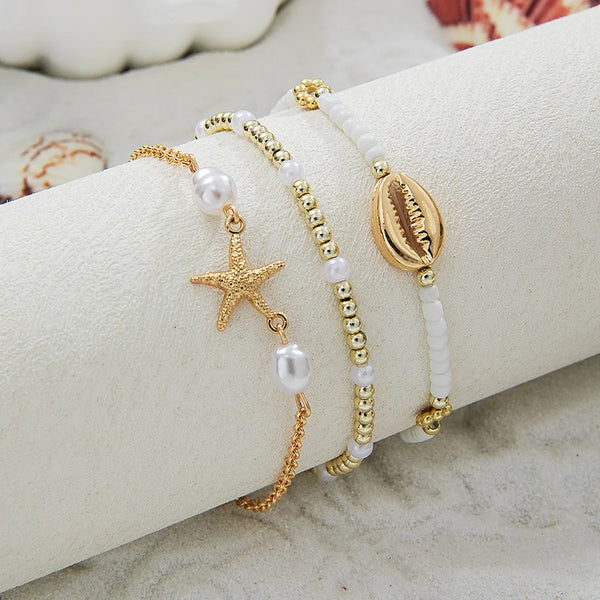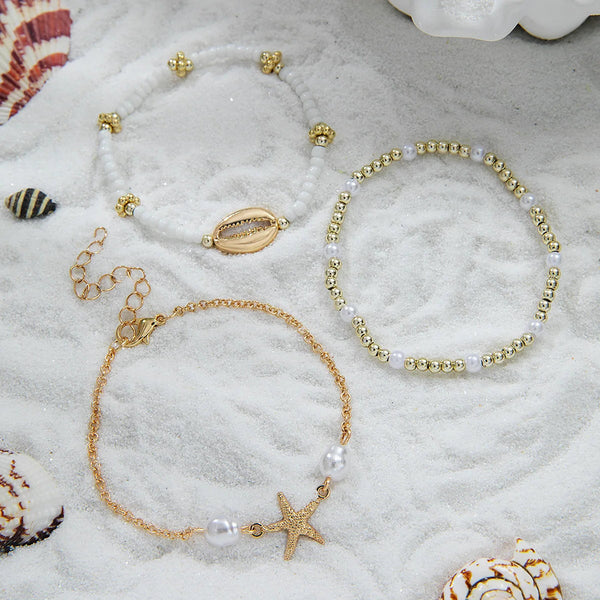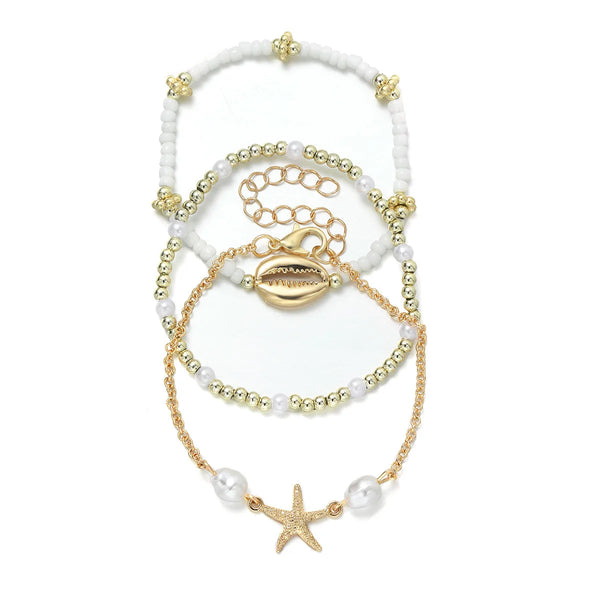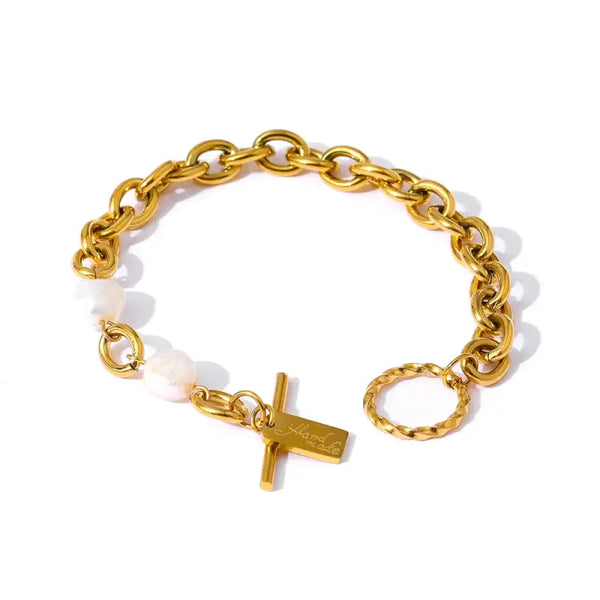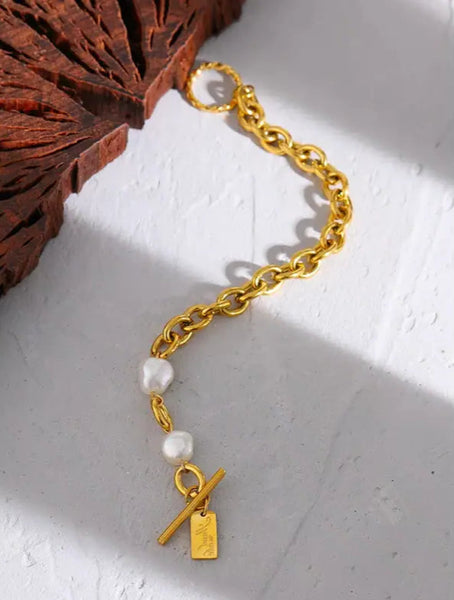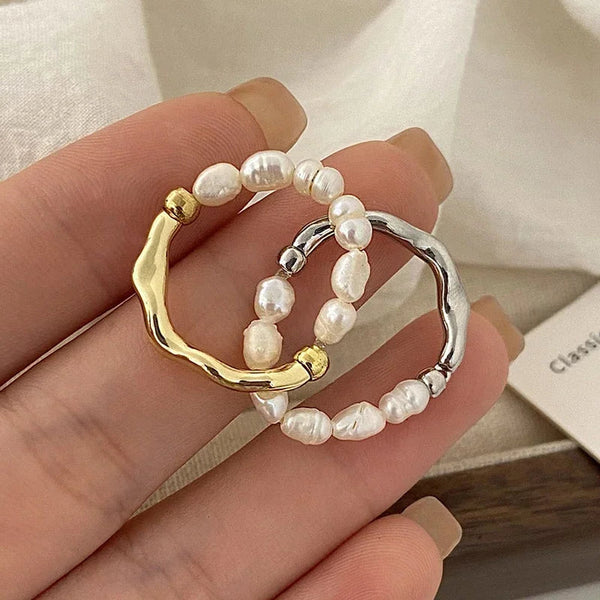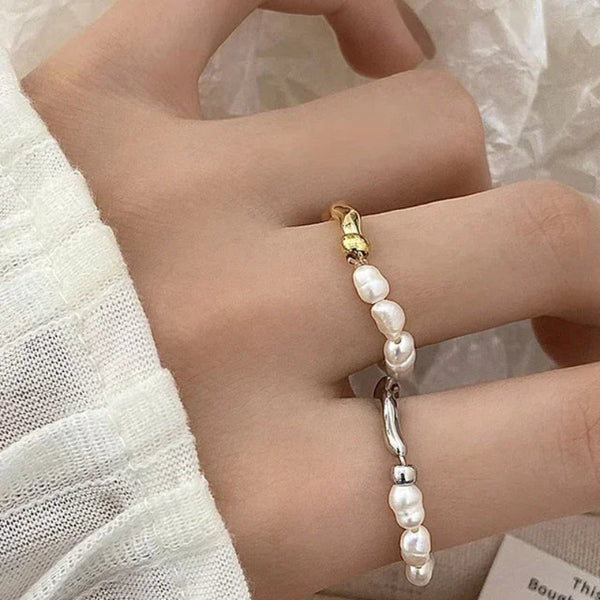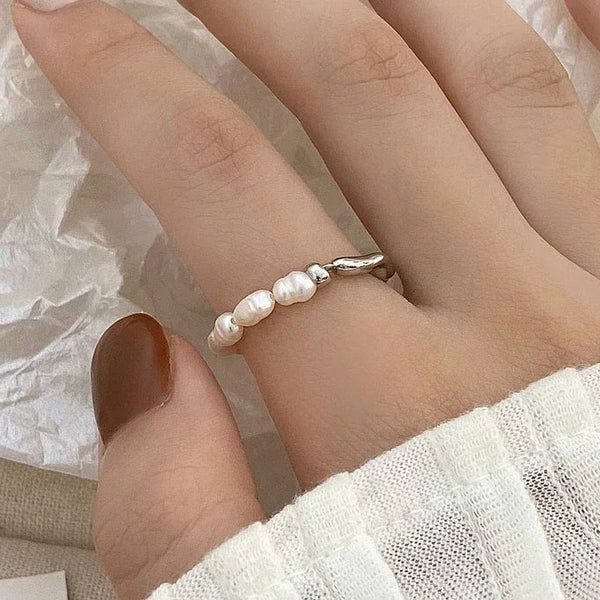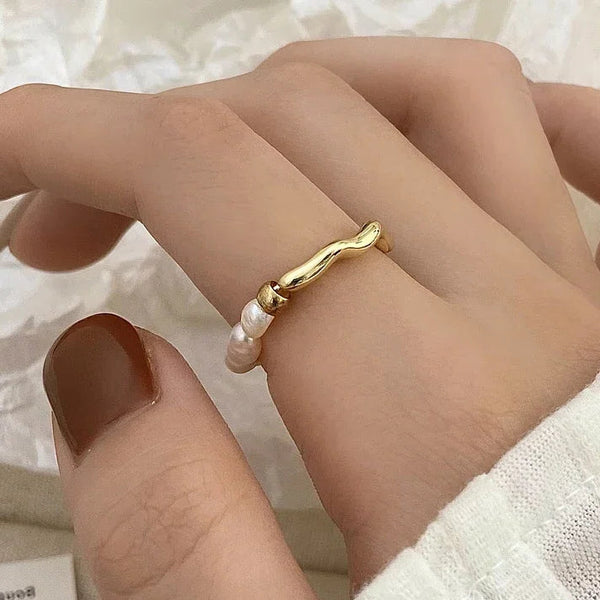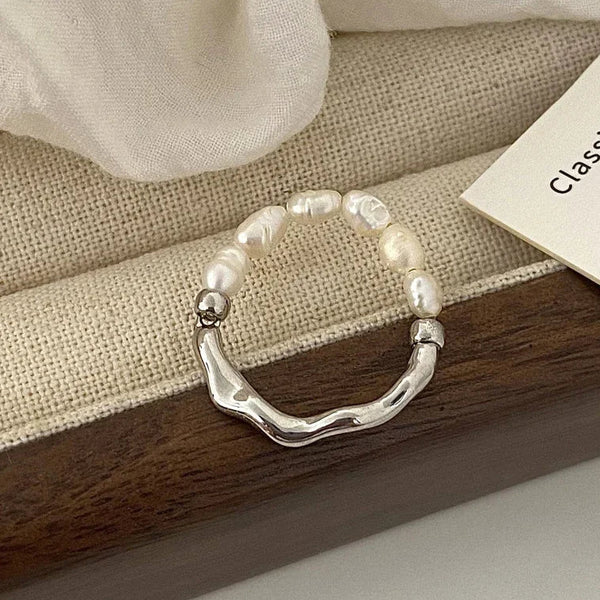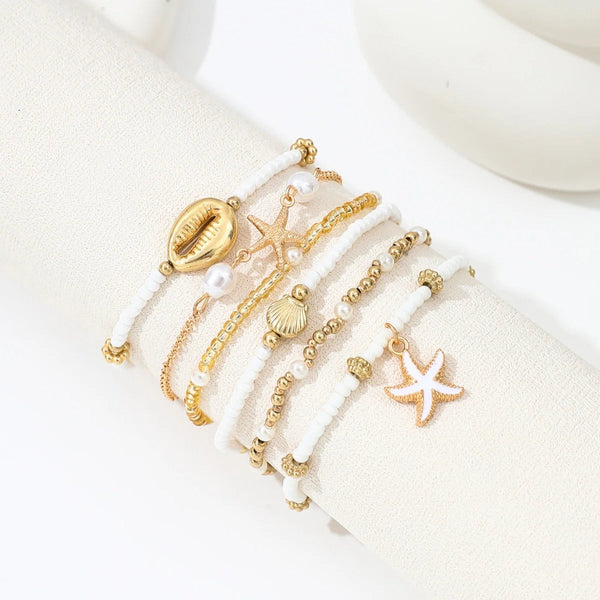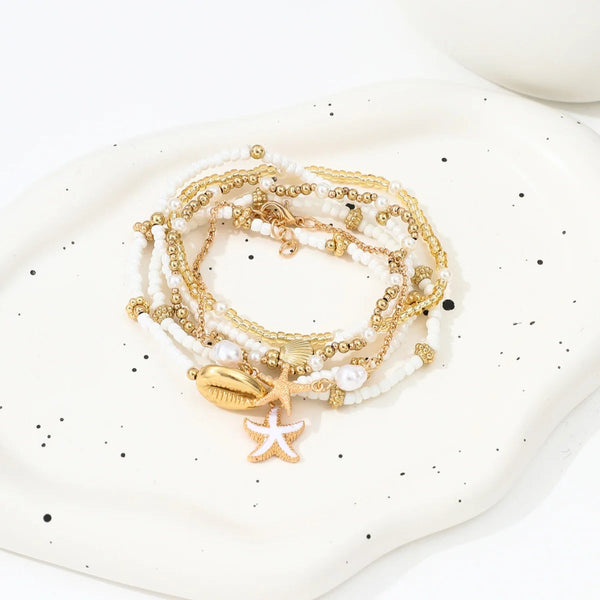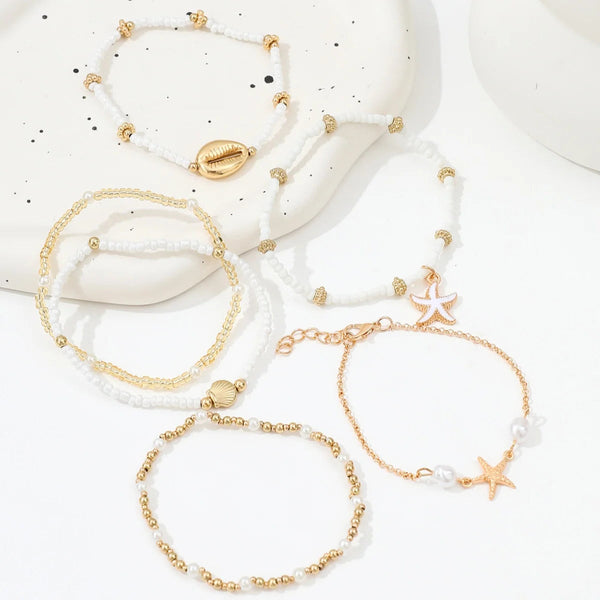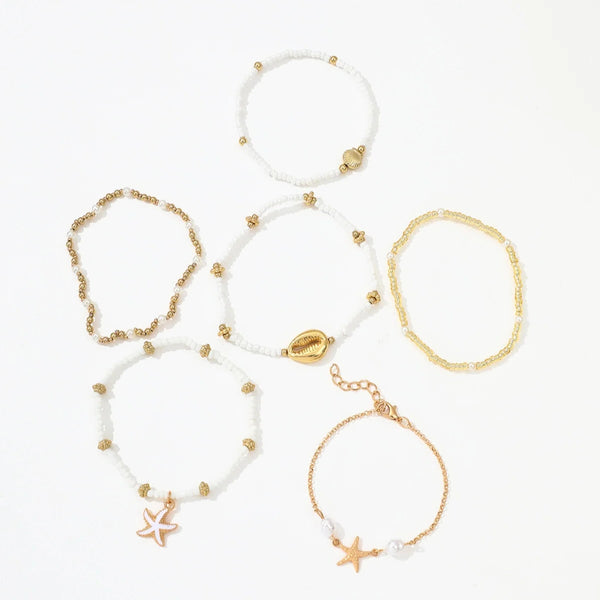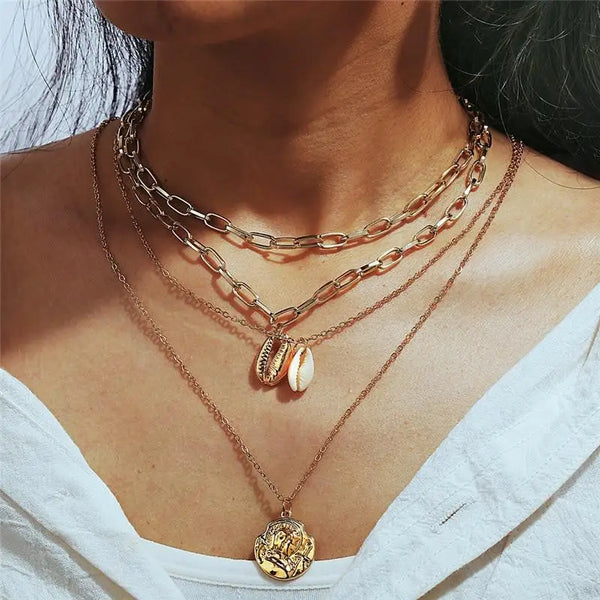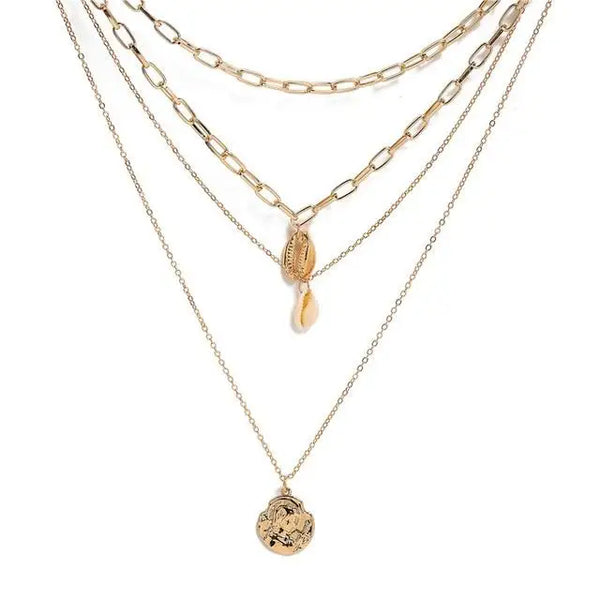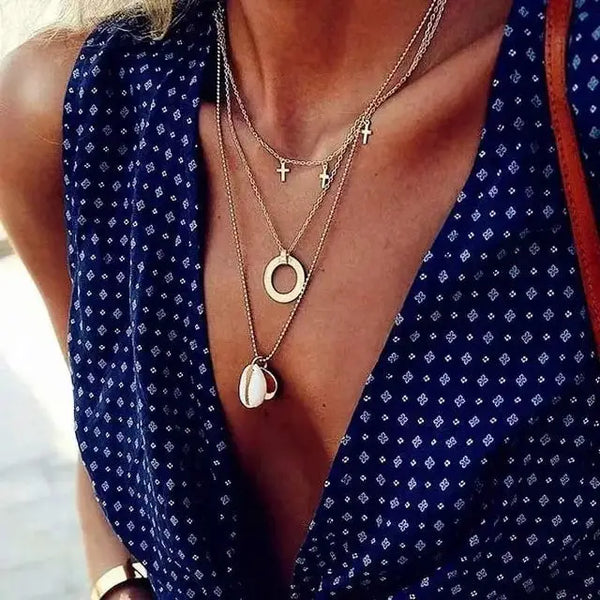


A shell ring is exactly what it sounds like: a small piece of the sea, set on a band, worn on your finger every day. Some are carved from mother-of-pearl. Others cradle a cowrie, a puka slice, or a sliver of abalone that shifts colour when the light moves. Women have worn them for centuries, from island shores to festival fields, and they're back everywhere this summer. Here's how to choose yours, stack it, style it, and keep it beautiful season after season.
What Are Boho Shell Rings? The Ocean, Worn on Your Finger
Picture a ring that started life underwater. That's the whole idea. A natural shell is cleaned, shaped, sometimes polished, then set on a band of silver, gold-tone brass, or a fine adjustable wire. No two are ever twins, because no two shells are. One might carry a faint ridge, another a pink blush along its edge. That tiny imperfection is the proof of its origin, and it's exactly what makes boho shell jewellery feel alive on the skin.
The bohemian version leans soft and unfussy. Think open bands, organic shapes, warm metals, nothing stiff or over-designed. These rings are made to be worn barefoot, with salt still drying in your hair. They pair with everything and demand nothing.
Cowrie, Puka, Abalone & Mother-of-Pearl: The Shells Behind the Magic
Not all shells behave the same way, and knowing the difference helps you pick well.
- Cowrie is the small, glossy, egg-shaped shell with a slit down its belly. It's smooth as a pebble and famously hard-wearing. The queen of boho jewellery, and the one most people picture first.
- Puka means "hole" in Hawaiian. These are naturally worn shell fragments, tumbled by waves until they're round with a little opening in the middle. Chalky white, sun-bleached, very surf.
- Abalone (also called paua) is the iridescent one. Its inner surface flashes blue, green, and violet depending on the angle. Dramatic, and never quiet.
- Mother-of-pearl is the pearly lining found inside oyster and other mollusc shells. Creamy, softly luminous, and the most elegant of the four. It's the shell that works as easily with a slip dress as with denim cut-offs.
Handcrafted vs. Mass-Made: How to Spot a Real Shell Ring
Resin copies exist, and they're getting better at pretending. A few things give them away. Real shell feels cool when you first touch it, then slowly warms. Resin stays neutral. Hold the piece to the light: natural nacre has depth and shifting layers, while plastic looks flat and evenly shiny. Check the back, too. A genuine shell often shows a slightly rougher underside where it was cut.
Then there's the setting. Handcrafted rings show tiny variations in how the metal wraps the shell, because a hand did it, not a mould. Mass-made pieces are identical down to the millimetre. If a shop can tell you which shell it is and where the piece was assembled, that's usually a good sign.
Why Bohemian Souls Have Always Worn Shells
Long before shell rings landed on a beach girl's Instagram grid, they were something closer to sacred. Shells travelled inland along trade routes and were treasured by people who had never seen the sea. They were currency, offering, and amulet all at once.
Ancient Talismans: Symbols of Femininity, Abundance & Protection
The cowrie carries the richest story. Its shape has been linked to feminine energy and fertility across West Africa, the Pacific, and South Asia for thousands of years. It was used as money in dozens of cultures, which is why it also became a symbol of abundance and good fortune. Worn on the body, it was believed to protect the wearer and draw prosperity closer.
Mother-of-pearl has its own quieter reputation, tied to calm, intuition, and the moon. Whether or not you believe in any of it, there's something grounding about wearing an object that has meant something to women for so long. It turns an accessory into a small daily ritual.
The Modern Beach Girl Revival: Why Shell Rings Are Everywhere Again
The nineties surf look came back, and the shells came with it. But the revival goes deeper than nostalgia. After years of cold, minimal, mass-produced jewellery, women want pieces with texture and a story. Natural materials feel like an answer to that. A hand-picked shell ring costs less than fine jewellery, wears more easily, and says more about you.
There's also the eco side. Shells are a natural material, and a well-made shell ring is designed to last years, not one season. That matters to anyone tired of jewellery that tarnishes by August.
How to Choose Your Shell Ring: A Little Guide for Wild Hearts
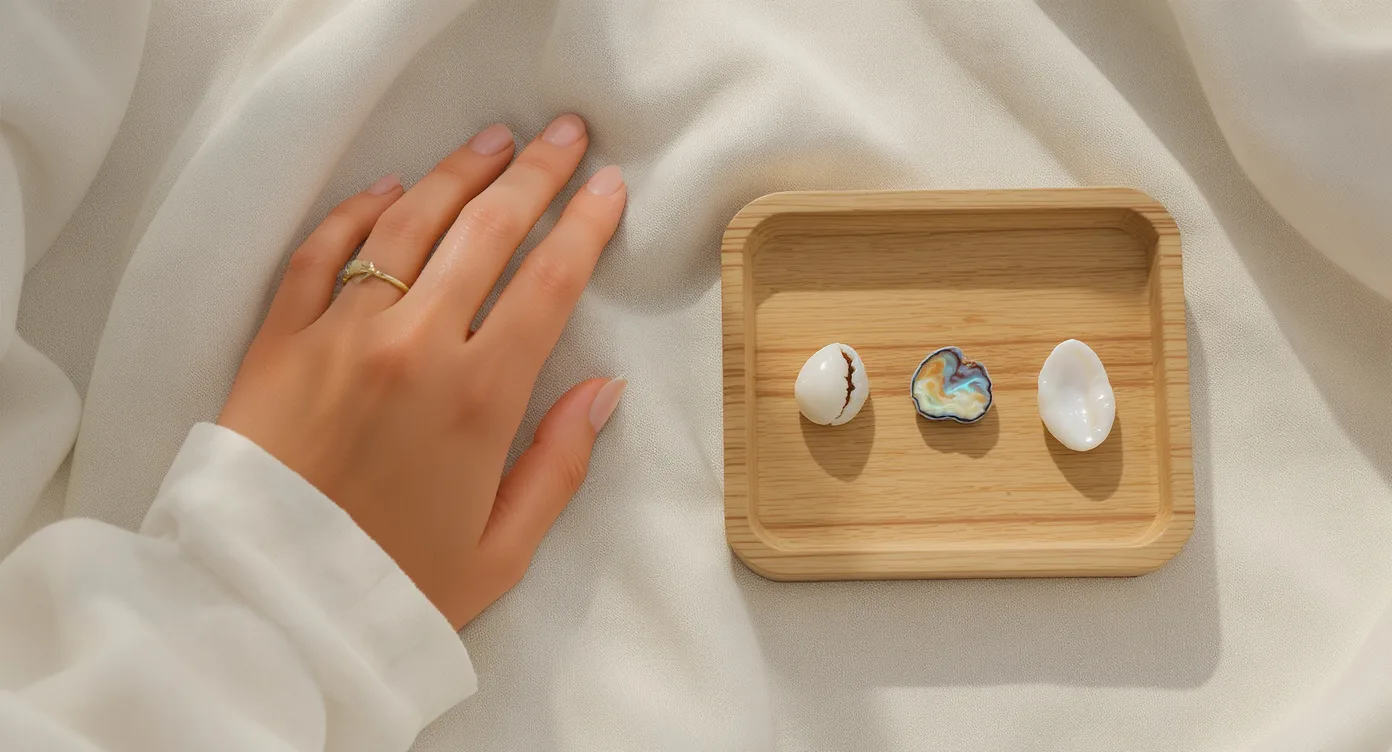
Buying a shell ring isn't complicated, but a few decisions will make you love yours for longer.
Finding Your Shell: Matching the Ring to Your Energy
Go by instinct first, then check the practical fit. Cowrie suits women who like a piece with presence and a bit of symbolism behind it. Mother-of-pearl is the softest option, ideal if you want something you can wear to work and to a wedding. Abalone belongs to bolder hands, especially if you already wear a lot of silver. Puka is pure holiday: relaxed, sun-faded, perfect stacked three at a time.
Consider your hands, too. Slimmer fingers carry small, close-set shells beautifully. Longer fingers can handle a wider statement shell without it looking heavy. And if you use your hands constantly, choose a low-profile shell that won't catch on sleeves and bags.
Metal Tones, Adjustable Bands & Getting the Fit Right
Gold tones warm up cream and sandy shells and flatter olive or golden skin. Silver sharpens abalone and puka, and looks crisp against cooler skin tones. There's no rule saying you must pick one. Mixing metals is very boho, and honestly, it looks better than matching everything.
Adjustable bands are your friend. Fingers swell in heat and after a swim, so a slightly open band saves you from a stuck ring at the beach. If you're buying a fixed size, measure at the end of the day when your hands are at their largest. Wrap a strip of paper around the base of your finger, mark it, and compare it to a size chart.
Eco-Conscious Sourcing: Choosing Shells That Honour the Sea
Ask where the shells come from. The best pieces use naturally collected shells, gathered after the animal has left them, rather than harvested live. Look for brands that hand-select their materials instead of ordering bulk lots blind. Small batches and slight irregularities usually point to a more careful process.
Packaging counts as well. If a ring arrives wrapped in three layers of plastic, that tells you something about the whole operation. Choosing well-made, hand-finished jewellery is already a small ecological act, because you'll replace it far less often.
Styling Boho Shell Rings: From Sunrise Swims to Golden Hour
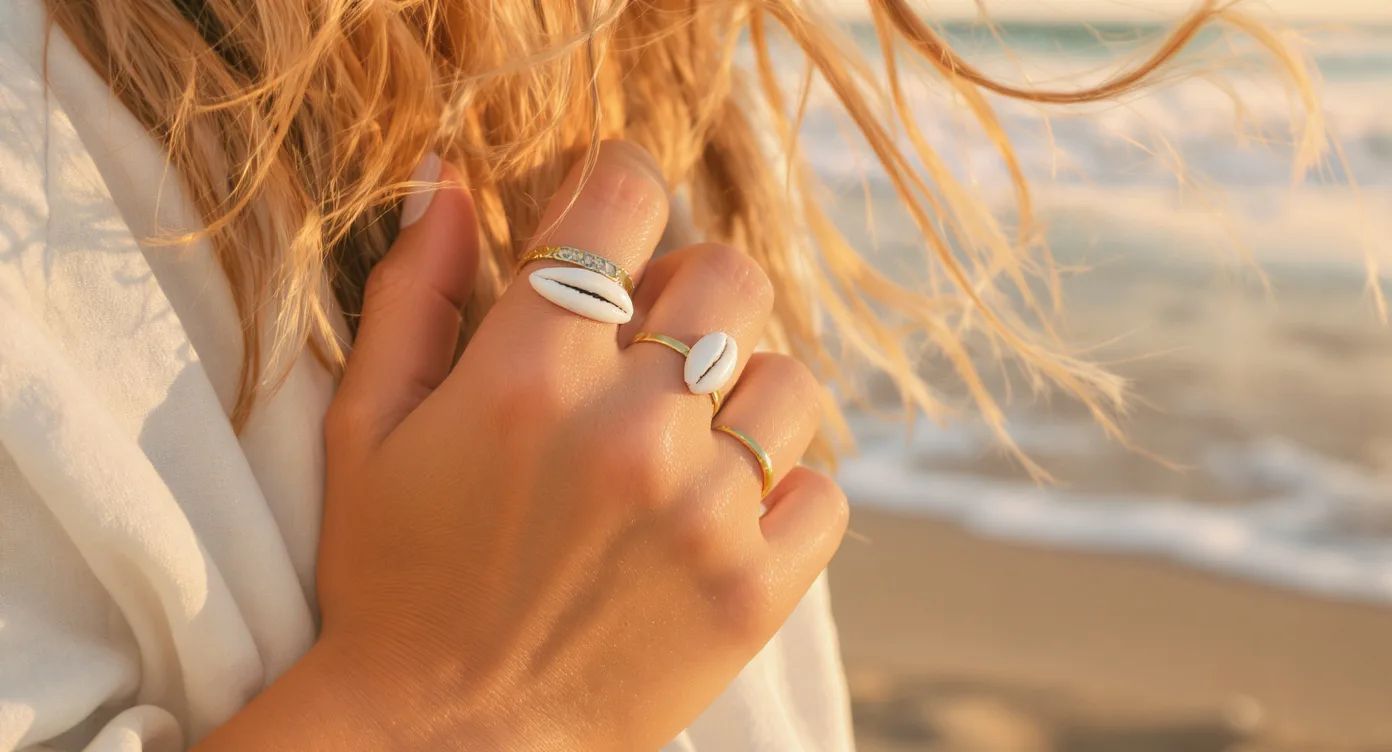
Shell rings are generous. They work with almost everything, which is why they end up living on your hand permanently.
The Art of the Shell Ring Stack
A good stack looks accidental and isn't. Start with one shell ring as the hero, then build around it with thinner plain bands. Three rings across two adjacent fingers is a reliable formula. Keep one hand busier than the other so the look stays balanced rather than crowded.
Vary the heights. A chunky cowrie next to two fine wire bands creates rhythm, while three identical rings look flat. Leave your index finger bare if you're wearing a lot on the middle and ring fingers. Negative space is part of the design.
Mixing Shell Rings with Necklaces, Anklets & Layered Coastal Pieces
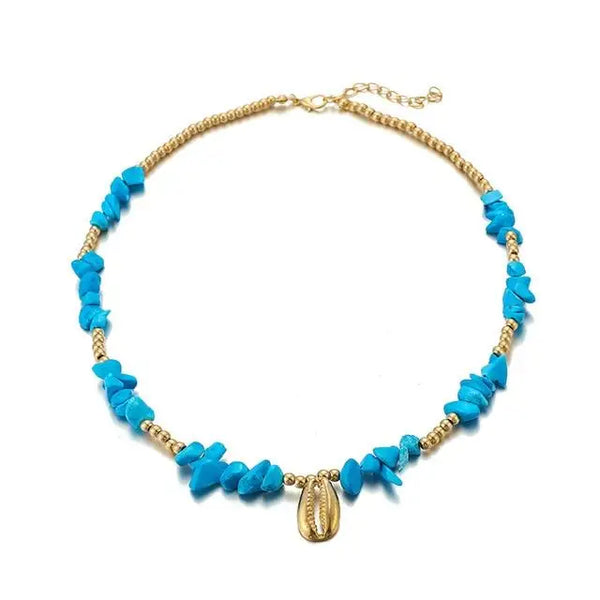
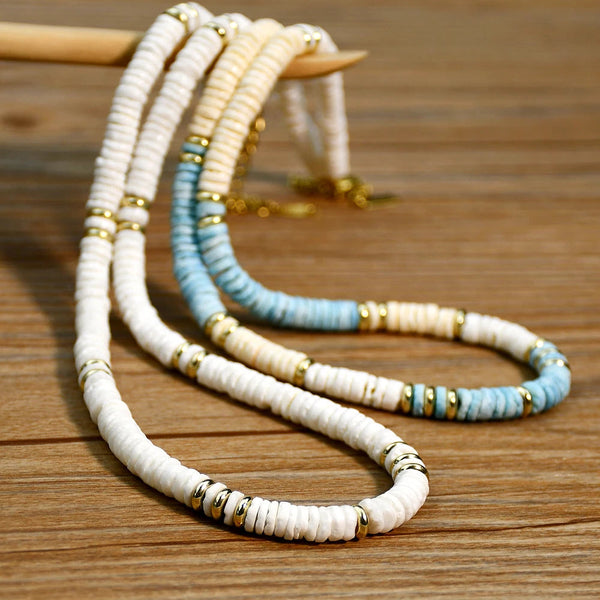
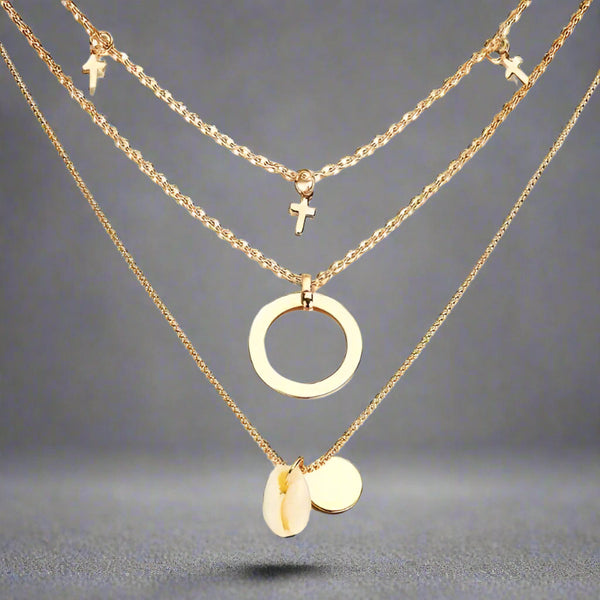
The trick to layering shells is repetition without matching. If you're wearing a cowrie ring, echo it somewhere else on the body, at the throat or the ankle, in a different size. A piece like the Sands of Serenity Shell Necklace sits beautifully with cream-toned rings and keeps the whole look in the same warm, sandy family.

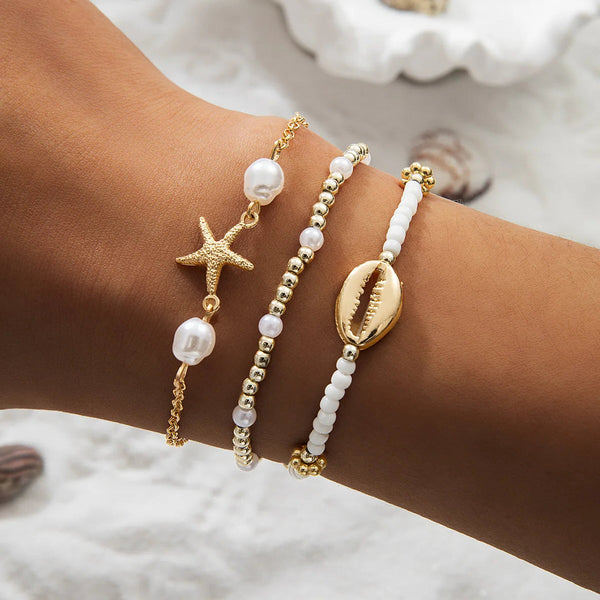
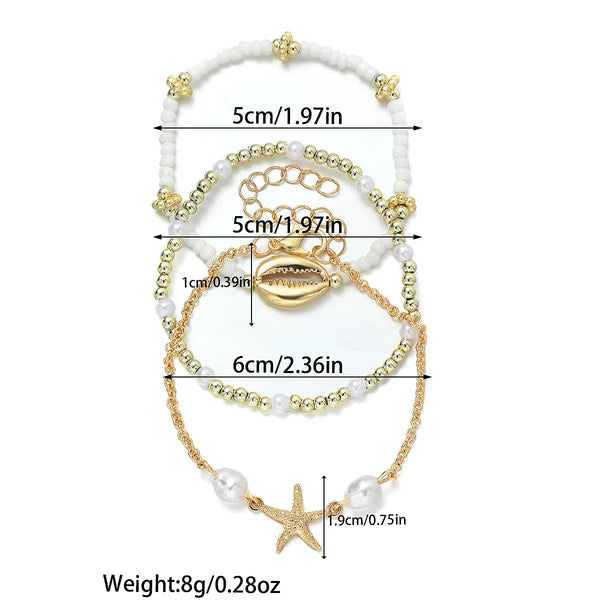
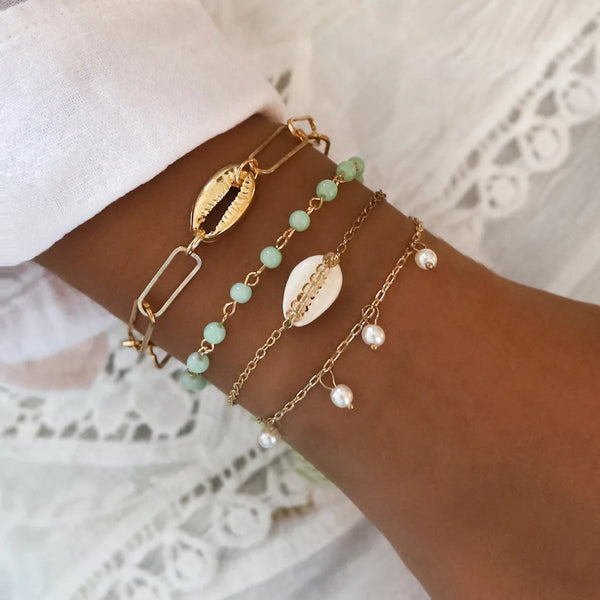
For a fully coastal set, matched pieces do the work for you. The Solstice Cowrie Set pairs a necklace and bracelet, which means your ring simply becomes the third note in a chord that's already tuned. Add an anklet if you're going barefoot, and stop there.

Beach Day, Festival, City Nights: Three Looks, One Ring
- Beach day: one shell ring, damp hair, a linen shirt over your swimsuit. Nothing else needed.
- Festival: stack three, mix gold and silver, add rings on both hands and a stack of thin bracelets. More is more here.
- City nights: a single mother-of-pearl ring against black. It reads as elegant, not beachy, and that contrast is where shell jewellery gets interesting.
Caring for Your Shell Rings So They Last Season After Season
Shell is a natural material, which means it's tougher than people think and fussier than people expect. Treat it a bit like your skin: it doesn't love harsh chemicals, and it prefers being rinsed after the beach.
Saltwater, Sunscreen & Sand: What Shells Really Don't Love
Salt is the main culprit. It dries on the surface and dulls the shine over time, and it accelerates tarnish on the metal band. Sunscreen and body oils are just as bad. They leave a film that builds up in the crevices and turns a bright shell cloudy.
Sand acts like fine sandpaper, so avoid rubbing your rings when your hands are gritty. Perfume, hairspray, and chlorine all deserve the same caution. The simple rule: put your rings on last when you're getting ready, and take them off first when you get home.
Cleaning & Polishing Natural Shell Jewellery
Use lukewarm water and a drop of gentle soap. Wipe the shell with a soft cloth, never an abrasive sponge. Dry it fully, especially around the setting, because trapped moisture is what makes metal go dark. A soft toothbrush handles stubborn residue in tight corners.
Skip chemical jewellery dips entirely. They're designed for hard stones and metal, and they can strip the natural shine from nacre. If a shell looks dry after a summer of wear, a tiny amount of mineral oil on a cloth restores the glow. Buff it off properly so nothing stays sticky.
Where to Keep Them: Storing Your Treasures Between Tides
Loose rings in a bag scratch each other. Store them somewhere padded and dark, away from direct sun, which can fade coloured shells over months. A dedicated box with small compartments is genuinely the difference between jewellery that lasts three years and jewellery that lasts ten.
A Vintage Wooden Drawer Jewelry Box gives each ring its own space and keeps humidity in check better than plastic. Keep it on your dresser, and you'll actually put your rings away instead of leaving them by the sink. That single habit protects them more than any cleaning routine.

Frequently Asked Questions About Shell Rings
Can you wear shell rings in the ocean or the shower?
Better not to. A quick dip won't ruin anything, but repeated exposure to salt, chlorine, and soap dulls the shell and tarnishes the band. Slip your rings off before swimming, and rinse them in fresh water if they do get wet.
Do shell rings break easily?
Cowrie and puka are surprisingly sturdy, since they've already survived years of waves. Mother-of-pearl and thin abalone slices are more fragile and can chip if knocked against something hard. Remove yours before the gym, gardening, or washing up.
What does a cowrie shell ring symbolise?
Feminine energy, abundance, and protection. Cowries served as currency across many cultures, which linked them to prosperity, and their shape has long been associated with fertility and the divine feminine. Wearing one is a quiet nod to that lineage.
How do I stop a shell ring from turning my finger green?
Green marks come from the metal reacting with moisture and skin acidity, not from the shell. Keep the band dry, take it off before washing your hands, and store it somewhere with low humidity. Choosing sterling silver or a well-plated band also makes a big difference.
Carry the Tide With You
The right shell ring stops feeling like an accessory after about a week. It becomes the thing you touch while you're thinking, the small piece of coastline that comes with you to the office, the supermarket, the middle of February. That's the real appeal of boho shell jewellery: it keeps summer within reach all year.
Start with one shell you genuinely love, learn how it sits on your hand, then build your stack slowly. Give the pieces a proper home between wears. Your rings will still be catching the light long after this season's trends have washed out.